Mechanisms of target therapy resistance in non-small cell lung cancer
Article Sidebar
Main Article Content
Abstract
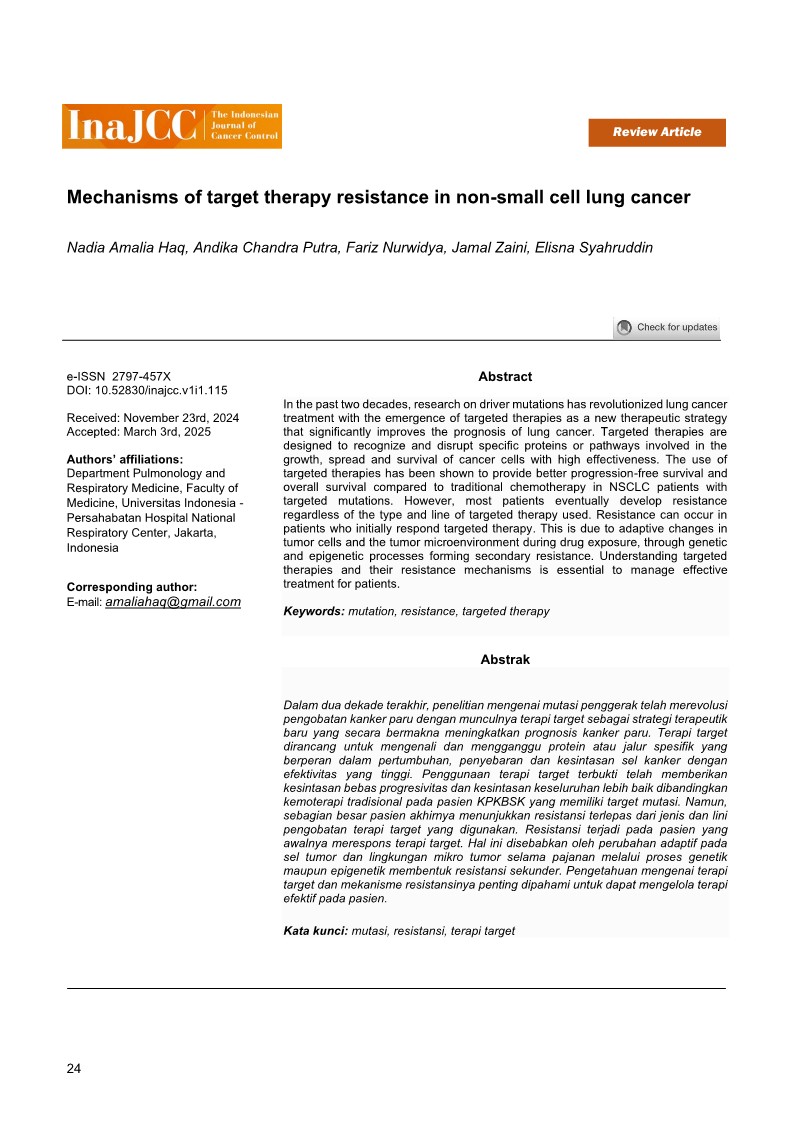
In the past two decades, research on driver mutations has revolutionized lung cancer treatment with the emergence of targeted therapies as a new therapeutic strategy that significantly improves the prognosis of lung cancer. Targeted therapies are designed to recognize and disrupt specific proteins or pathways involved in the growth, spread and survival of cancer cells with high effectiveness. The use of targeted therapies has been shown to provide better progression-free survival and overall survival compared to traditional chemotherapy in NSCLC patients with targeted mutations. However, most patients eventually develop resistance regardless of the type and line of targeted therapy used. Resistance can occur in patients who initially respond targeted therapy. This is due to adaptive changes in tumor cells and the tumor microenvironment during drug exposure, through genetic and epigenetic processes forming secondary resistance. Understanding targeted therapies and their resistance mechanisms is essential to manage effective treatment for patients.
Article Details

This work is licensed under a Creative Commons Attribution-NonCommercial 4.0 International License.