Vol. 4 No. 1 (2025): January – April
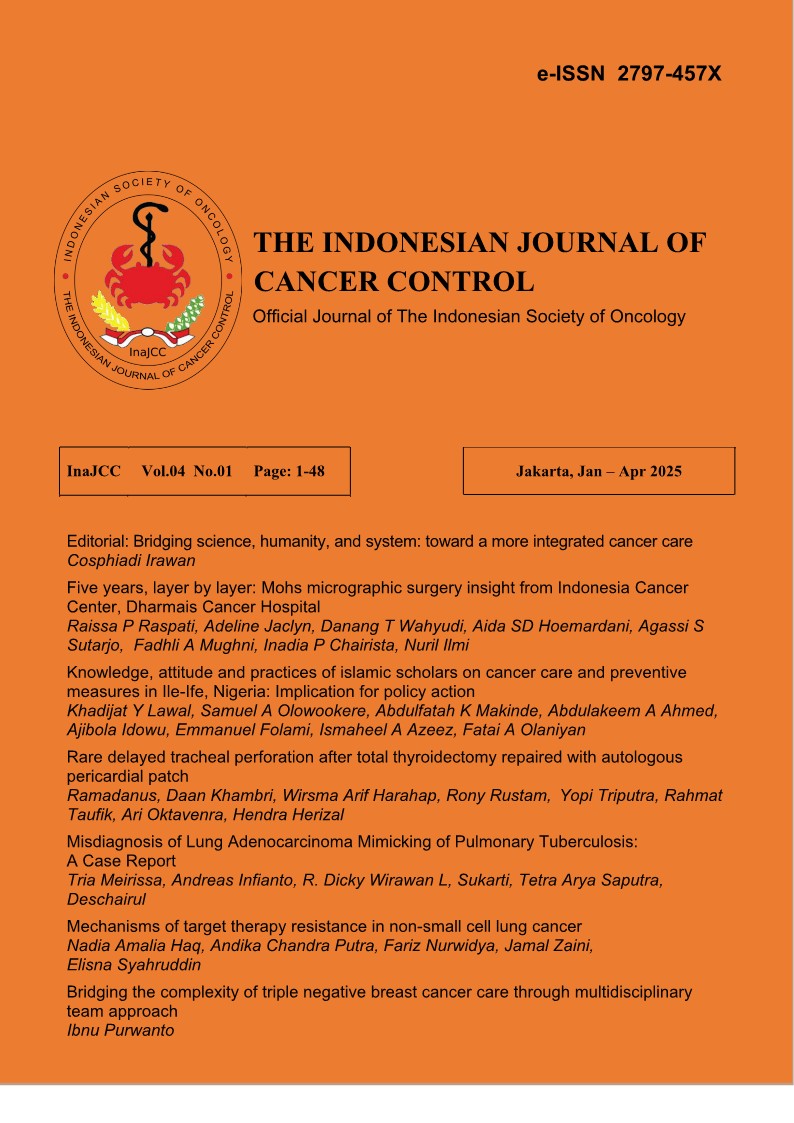
This issue traces where cancer control in Indonesia is actually won or lost: at first contact, at the surgical margin, and around the multidisciplinary table.
Two case reports document the failure modes clinicians meet most often. A 65-year-old man whose cavitary lung lesion and three months of cough were managed as pulmonary tuberculosis until biopsy returned adenocarcinoma is a reminder that, in a high-burden setting, radiological similarity is not diagnostic agreement. A delayed tracheal perforation on day four after total thyroidectomy for infiltrating bilateral thyroid cancer, closed with an autologous pericardial patch reinforced by a PTFE implant, records a complication rare enough that most surgeons will meet it without precedent.
Surgical quality is examined directly in a retrospective review of 83 Mohs micrographic surgery cases at Dharmais Cancer Hospital, where tumours in high-risk anatomical zones predominated and a margin of at least 3 mm was significantly associated with single-stage clearance. Two reviews then take up treatment failure at the molecular level, in adaptive and epigenetic resistance to targeted therapy in non-small cell lung cancer, and at the organisational level, where PD-L1 CPS, immune cell scoring and BRCA status now steer triple-negative breast cancer management and the multidisciplinary team itself becomes part of the therapeutic instrument.
A mixed-method study of 128 Islamic scholars in Ile-Ife, Nigeria closes the issue where prevention actually begins, among the people communities consult long before an oncologist is involved.