
Vol. 4 No. 3 (2025): September – December
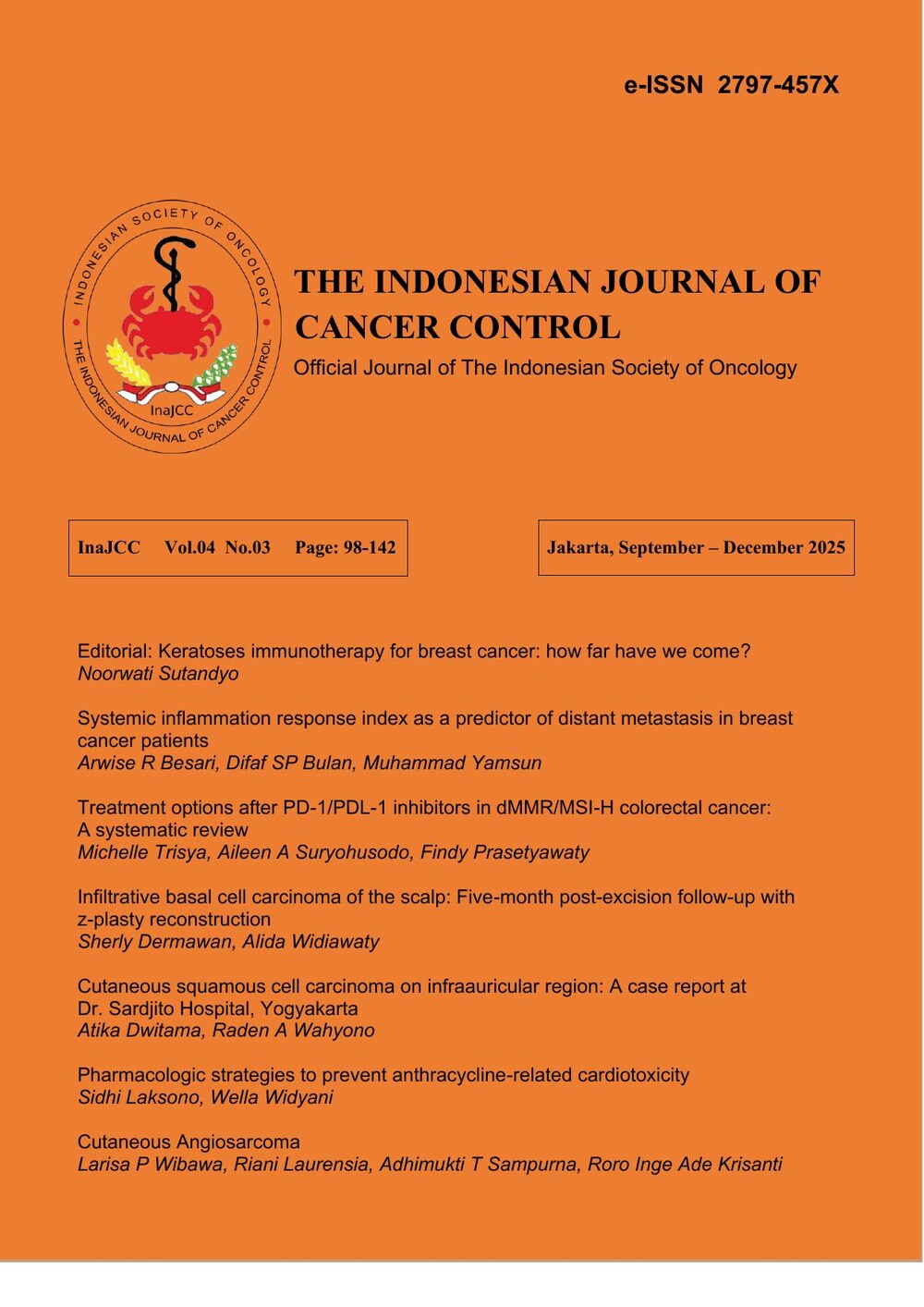
Volume 4 Number 3 moves from the systemic signals that predict how a cancer will behave to the decisions that follow them. The editorial asks how far immunotherapy for breast cancer has actually come, tracing the path from metastatic triple-negative disease to the adjuvant and neoadjuvant trials now under way.
Two original articles test what routine data can tell clinicians. A retrospective study of 869 breast cancer patients finds the pre-treatment systemic inflammation response index markedly higher in those with distant metastasis, pointing to a low-cost and non-invasive prognostic marker. A systematic review of MSI-H/dMMR colorectal cancer gathers nine studies and 38 patients who progressed on PD-1/PD-L1 blockade, and finds conventional chemotherapy of modest benefit while combinations with bevacizumab or CTLA-4 blockade produced responses lasting 12 to 36 months.
Two case reports return to the skin. An infiltrative basal cell carcinoma on the scalp of a 48-year-old man, in a site rarely exposed to sun but subject to chronic trauma, shows how subclinical extension defeats an apparently complete excision. A cutaneous squamous cell carcinoma below the ear of a 39-year-old woman illustrates why nodal and distant involvement must be settled before wide excision in the head and neck.
Two reviews close the issue. The first sets out the pharmacologic strategies now available to prevent anthracycline-related cardiotoxicity, a growing concern as survival after cancer treatment lengthens. The second covers cutaneous angiosarcoma, an aggressive malignancy of vascular endothelial cells that accounts for only one to two per cent of soft tissue sarcomas yet carries a poor prognosis.