
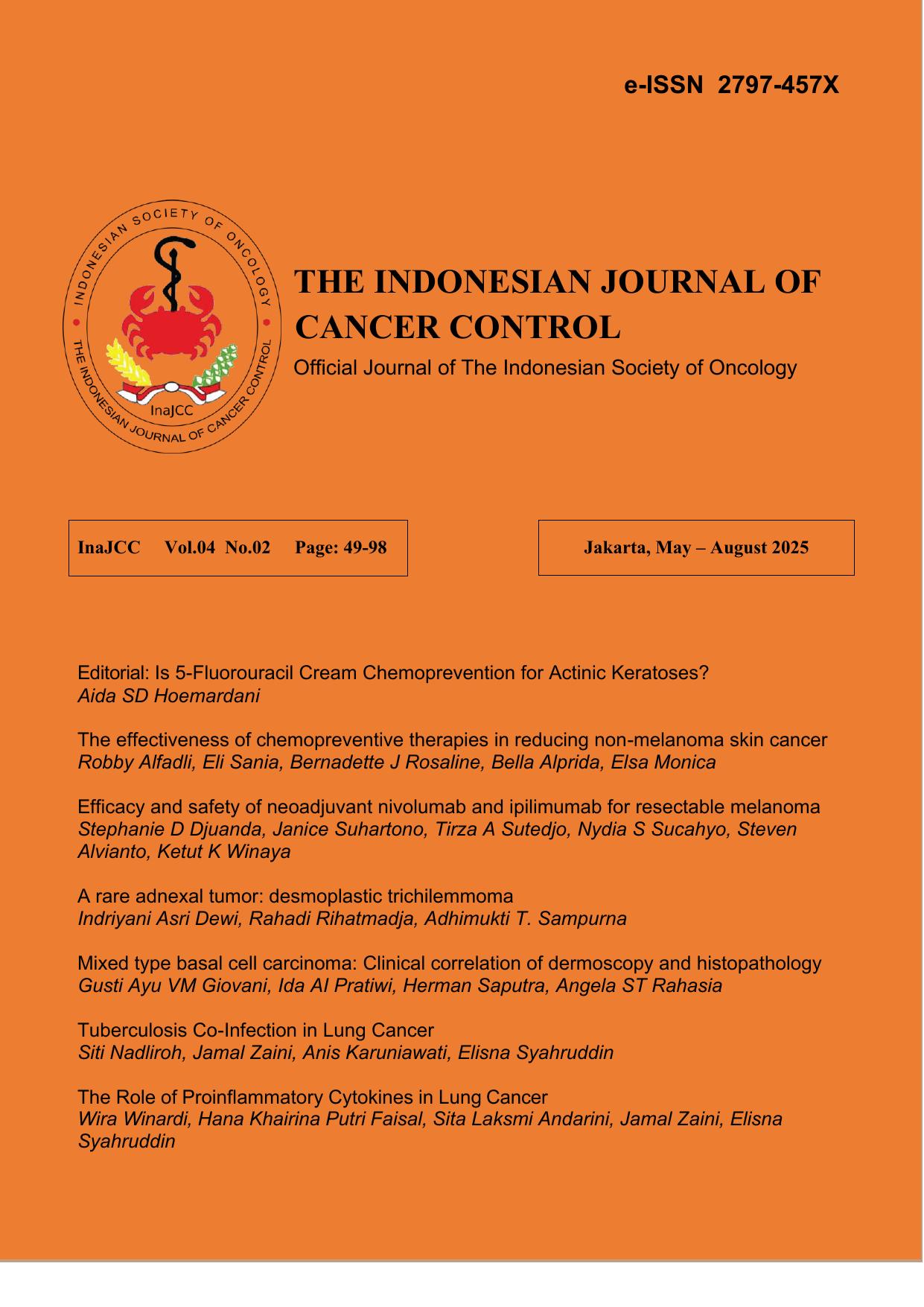
The Role of Proinflammatory Cytokines in Lung Cancer
DOI:
https://doi.org/10.52830/inajcc.v4i2.131Keywords:
interleukin-1, interleukin-6, lung cancer, pro-inflammatory cytokines, tumor necrosis factor alphaAbstract
Lung cancer is one of the deadliest types of cancer worldwide, with high morbidity and mortality rates. In the progression of lung cancer, pro-inflammatory cytokines play a crucial role in chronic inflammatory processes that can facilitate the growth and spread of cancer cells. Pro-inflammatory cytokines such as IL-1, IL-6, and TNF-α have been extensively studied due to their association with the pathogenesis of lung cancer. IL-1 triggers inflammatory responses and modulates the tumor microenvironment, IL-6 is involved in cancer cell proliferation and resistance to apoptosis, while TNF-α contributes to and metastasis. The relationship between these pro-inflammatory cytokines and lung cancer indicates that increased levels of these cytokines in the body can worsen cancer conditions by supporting tumor growth, evading immune responses, and promoting metastatic spread. Further research on the specific mechanisms of these pro-inflammatory cytokines is expected to pave the way for the development of more effective new therapies in tackling lung cancer
Downloads
Published
License

This work is licensed under a Creative Commons Attribution-NonCommercial 4.0 International License.