
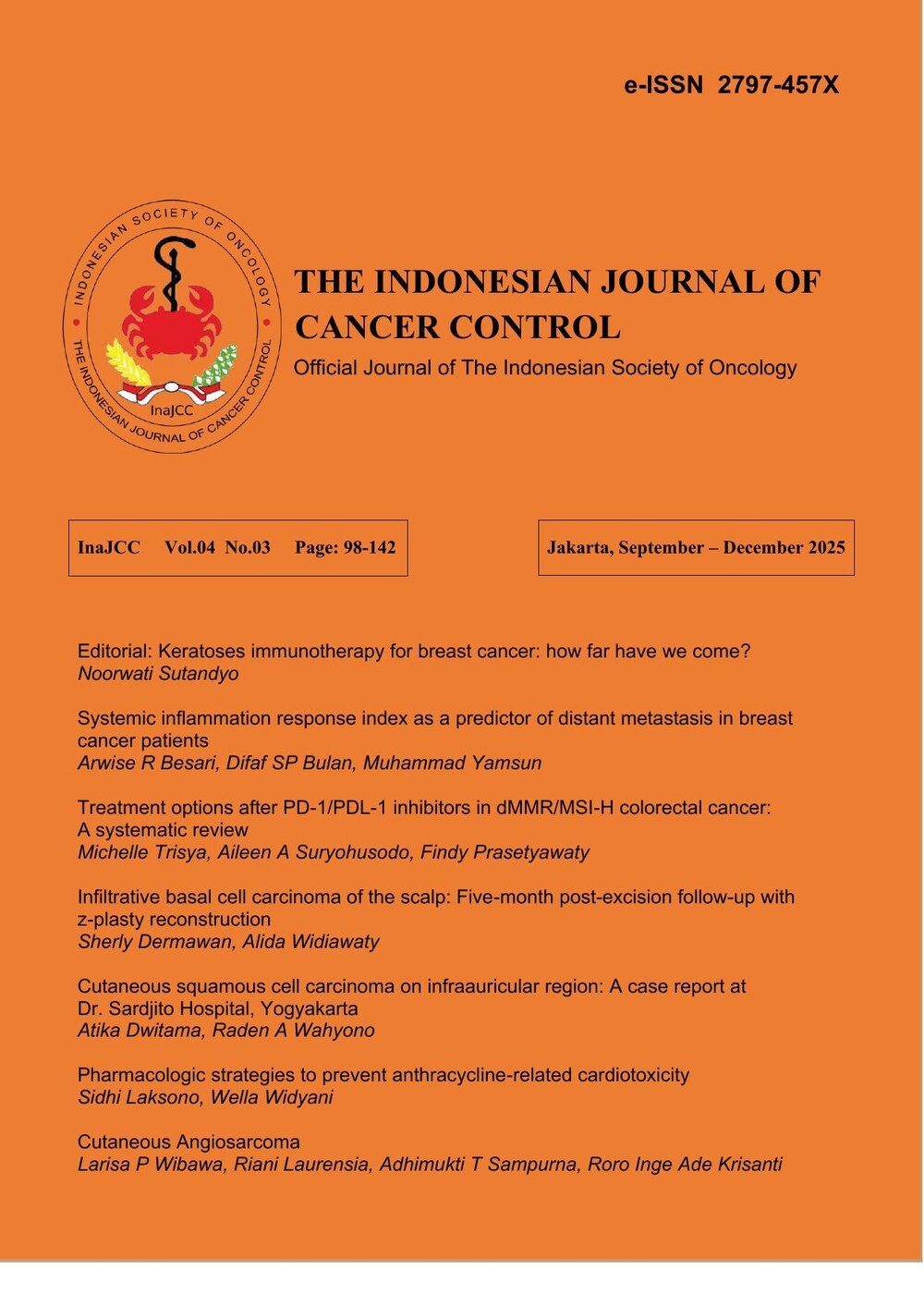
Pharmacologic Strategies to Prevent Anthracycline-Related Cardiotoxicity
DOI:
https://doi.org/10.52830/inajcc.v4i3.121Keywords:
anthracycline cardiotoxicity, cardio-oncology, pharmacologic preventionAbstract
Anthracycline-induced cardiotoxicity is a major complication of cancer therapy and a growing concern as long-term survival improves. Increasing cancer incidence, aging populations, and prevalent comorbidities further heighten vulnerability to cardiovascular injury. Standardized terminology such as cancer therapy-related cardiovascular toxicity and cancer therapy-related cardiac dysfunction, has been introduced to support clinical assessment. This narrative review aims to synthesize current evidence on pharmacologic strategies used to prevent anthracycline-related cardiotoxicity. Foundational therapies, including ACE inhibitors, angiotensin receptor blockers, β-blockers, and mineralocorticoid receptor antagonists, have shown variable cardioprotective effects, with heterogeneous outcomes across clinical trials. Emerging approaches such as angiotensin-neprilysin inhibition, statins, and SGLT2 inhibitors demonstrate promising early results but remain limited by short follow-up periods and inconsistent findings. Additional options, including biologically active compounds and cardiometabolic-targeted therapies, currently lack sufficient clinical support. Dexrazoxane remains the only FDA-approved agent for anthracycline cardiotoxicity prevention. Overall, pharmacologic prevention plays a central role in mitigating anthracycline-induced cardiovascular injury, underscoring the need for further research to refine targeted strategies and improve long-term cardiovascular outcomes in cancer survivors.
Downloads
Published
License
Copyright (c) 2025 Sidhi Laksono, Wella Widyani

This work is licensed under a Creative Commons Attribution-NonCommercial 4.0 International License.